





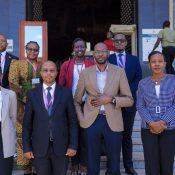
Chief Guest Dr. Mary Teopista (Center), Amb. Francis Butagira, Registrar General Ms. Mercy K. Kainobwisho and URSB board members pose for a photo at the URSB ISO Certification External Stakeholders celebration
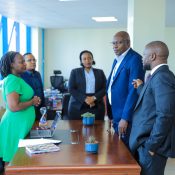
Hon. Nobert Mao congratulates the Registrar General, Ms. Mercy K. Kainobwisho, and Board member, Ms. Lydia A. Sekkabira on the ISO 9001:2015 certification milestone
Mr. Hamidu Tumuhimbise, a senior Registration Officer, attends to a client during the UEB claimants exercise at the Uganda Business Facilitation Center, Kololo
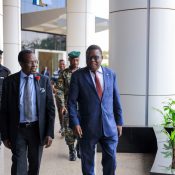
A delegation from PACRA led by the Deputy Registrar Mr. Chewe Peter Chilufya (Center) visited URSB for a 3 days benchmarking visit on the Intellectual Property Registry on how systems operate, the digital improvements implemented and how these reforms contribute to reduced turnaround time
A delegation from UNOC visits URSB to benchmark on the Digital Transformation Journey.
Director General WIPO Mr. Daren Tang, Minister of Justice Hon. Nobert Mao, The Registrar General Ms. Mercy K. Kainobwisho, URSB Board members a delegation from WIPO pause for a photo at the Uganda Business Facilitation Center during the DG’s mission to Uganda
Intellectual property experts, policymakers, scholars, and regulators from across Africa met in Nairobi last month to discuss the future of intellectual property (IP) on the continent and how it can support innovation and economic growth.
The two-day Focus Group Discussion workshop, held from April 27 to 28, 2026, was hosted by the Centre for Intellectual Property and Information Technology Law (CIPIT) at Strathmore University. The event was organized with support from the University of Ottawa’s Centre for Law, Technology and Society, the University of Cape Town, and Open AIR.
The Registrar General, Ms. Mercy K. Kainobwisho, who represented Uganda, alongside other participants, discussed major developments in intellectual property, including new World Intellectual Property Organization treaties, the AfCFTA Protocol on Intellectual Property Rights, traditional knowledge protection, biodiversity governance, and digital innovation.
Speakers noted that many African IP systems were inherited from colonial legal frameworks that mainly protected foreign interests. However, they said African countries are now making progress through digitalization, institutional reforms, and regional cooperation.
Uganda’s experience in reforming intellectual property administration was highlighted during the workshop. Participants praised efforts by the Uganda Registration Services Bureau (URSB) to improve trademark registration, strengthen anti-counterfeit enforcement, and increase awareness among small businesses and innovators.
The workshop also called on African countries to play a more active role in shaping global intellectual property policies rather than remaining passive participants.
Organisers said stronger IP systems will help Africa promote industrialisation, support startups, protect traditional knowledge, and boost intra-African trade and sustainable development.



5th Floor, Uganda Business Facilitation Centre,
Plot 1 Baskerville Avenue, Kololo,
P. O. Box 6848, Kampala.
Ms. Patience Buhikire is the Acting Commissioner Legal Services.
She has previously served in an acting capacity whenever substantive Commissioners were away on official duty or leave, ensuring stability and seamless operations. In her new role, she will oversee the Bureau’s legal and board affairs, guaranteeing continuity, regulatory compliance, effective governance support, and the provision of sound legal guidance in the execution of URSB’s mandate.
An Advocate of the High Court of Uganda with fourteen (14) years of experience, Ms. Buhikire is also a Commissioner for Oaths and Notary Public. She substantively serves as Assistant Commissioner Legal Services at URSB and previously headed the Legal and Advisory Services Department. She is a member of the Uganda Law Society, East African Law Society, and the Institute of Corporate Governance of Uganda.
Among her notable achievements is championing the establishment of the URSB Legal Department/Chambers, now a fully functional in-house law firm managing advisory and litigation matters. Over the past six years, she has supervised more than 90 civil cases, with 35 concluded in favour of the Bureau, saving an estimated UGX 2.5 billion in costs and damages.
She has supported over 25 legal reforms, led the development of the annual URSB Case Digest launched in June 2025, and spearheaded the acquisition of a digital Case Management System to enhance efficiency, transparency, and supervisory oversight.
Nabatanzi Miriam is a seasoned advocate with vast experience in regulatory compliance, family and corporate law practice, and strategic risk management. She has represented URSB in complex civil cases, and Uganda in criminal matters. Miriam has led a number of successful reforms and projects at URSB.
Miriam holds a master’s degree in law, along with professional qualifications in Leadership, Intellectual Property Rights, Secured Transactions, Governance, Risk and Compliance, Quality Management Systems, Anti Money Laundering and Terrorism Financing, Investigations and Prosecutions, among other certifications.
5th Floor, Uganda Business Facilitation Centre,
Plot 1 Baskerville Avenue, Kololo,
P. O. Box 6848, Kampala.
He is passionate, experienced, reputable and highly professional Accountant with thorough knowledge in Internal Audit, Financial Management, Risk Management and Good Leadership skills.
Ambrose has been a member of Institute of Certified Public Accountants of Uganda (ICPAU) for over 10 Years and has served as a member of Public Practice Panel (2018-2020), a member of Internal Audit Panel (2020- 2022) both are sub committees of the Professional Standards Committee of the ICPAU.
Previously he served as Manager Internal Audit at URSB from 2015- 2021, Head of internal Audit at Soroti Municipal Council (2007-2015) and Internal Auditor at Soroti Municipal Council (2005-2007). Ambrose holds CPA-U, PGD in Financial Management of UMI, BBA(Accounts) of Ndejje university, Diploma in Project Planning and Management among others.
3rd Floor, Uganda Business Facilitation Centre,
Plot 1 Baskerville Avenue, Kololo,
P. O. Box 6848, Kampala.
Mr. Mugabe Robert is an Advocate of the High Court of Uganda and other courts subordinate thereto.
Currently, he is serving as the Commissioner for Intellectual Property (IP) at the Uganda Registration Services Bureau (URSB).
As Commissioner, he provides strategic leadership and oversight for Uganda’s intellectual property (IP) system, including the examination, registration, and protection of intellectual property rights. He has championed reforms aimed at strengthening IP administration, enforcement, and commercialization to support innovation, creativity, and knowledge based enterprise through programs like the Brand protection initiative and IP for young learners.
He has also led initiatives to enhance IP awareness among innovators, SMEs, and academic institutions, while fostering regional and international collaborations that align Uganda’s IP system with global standards. His efforts have been instrumental in positioning intellectual property as a key driver of economic growth in Uganda.
Previously, Mr. Mugabe served as Commissioner for Insolvency and Receivership; and Director Business Registration, respectively, where he played a pivotal role in driving business reforms since 2008.
These reforms include insolvency and business rescue initiatives, which have enabled numerous entities to avoid insolvency; and Business re-engineering processes that reformed business registration in Uganda through a simplified online registration process significantly enhancing accessibility and efficiency in service delivery.
He has represented Uganda at both national and international forums, advancing the country’s position in areas of business formalization, Insolvency and intellectual property.
Mr. Mugabe holds a Master of Laws (LLM) in Oil and Gas Management, an MBA in Oil and Gas Management, a Bachelor of Laws (LLB), and a Postgraduate Diploma in Legal Practice from the Law Development Centre. He has also obtained a number of trainings in Intellectual Property as well as multiple other certifications in leadership and management.
Prior to joining URSB, he served as a State Attorney with Ministry of Justice and Constitutional Affairs.
3rd Floor, Uganda Business Facilitation Centre,
Plot 1 Baskerville Avenue, Kololo,
P. O. Box 6848, Kampala.
Agaba Gilbert is the Commissioner Business Registration at Uganda Registration Services Bureau where he currently manages the team that administers Business Registration in Uganda.
Agaba is passionate about intellectual property and has participated in various intellectual property initiatives nationally and internationally including chairing the expert committee that negotiated text for the Arusha Protocol for the Protection of New Varieties of Plants, was a member of the steering committee for the formulation of the National Intellectual Property Policy, is a member of the National Expert Group on the use of patent information in appropriating technology, and represents Uganda at various meetings of the World Intellectual Property Organisation where he is immediate past Vice Chair of the Paris Union Executive Committee.
Agaba is also a Registrar of intellectual property rights and in this role he examines and registers trademarks, patents, industrial designs, and copyright. He has audited Collective Management Organisations, he also adjudicates in contentious matters in prosecution of intellectual property rights, and is responsible for ensuring the quality of the intellectual property rights granted.
Agaba is an avid promoter of intellectual property as a tool for development and participates in various sensitization and awareness building activities nationally and internationally to promote intellectual property.
5th Floor, Uganda Business Facilitation Centre,
Plot 1 Baskerville Avenue, Kololo,
P. O. Box 6848, Kampala
Mr. Ntale Mustapher is the Deputy Registrar General – Registries at Uganda Registration Services Bureau (URSB). He is also a member of the Board of Directors of the Capital Markets Authority (CMA), representing URSB since September 2025.
Mr. Ntale holds a Master of Laws (LLM) degree from University of Cambridge, UK, a Bachelor of Laws (LLB) degree from Makerere University and a Postgraduate Diploma in Legal Practice from Law Development Centre, Kampala. He received the Chief Justice’s Prize (2008), the Attorney General’s Prize (2009) and the Commonwealth Shared Cambridge Scholarship (2009/10) for outstanding academic performance.
He previously served as the Commissioner Legal Services / Board Secretary, Commissioner Registration Services in charge of Business Registration and Director Insolvency & Receivership all at URSB. He superintended the transition of the business registry from manual to a digital registry and undertook several reforms leading to removal of Uganda from the Financial Action Task Force (FATF) Grey-List. He also undertook several insolvency legal and institutional reforms and took part in the turn-around of Uganda Telecom Limited (UTL).
Prior to joining URSB, Mr. Ntale worked with Newmark Advocates, Kasimbazi, Kamanzi & Co. Advocates and taught law at Islamic University in Uganda. He also consulted for USAID, Oxfam, and World-Wide Fund for Nature (WWF). He is an Advocate, a member of Uganda Law Society and East Africa Law Society.
4th Floor, Uganda Business Facilitation Centre,
Plot 1 Baskerville Avenue, Kololo,
P. O. Box 6848, Kampala.
Freda Bwiizi Nayebare Otafiire has invaluable experience of 10 years in project planning, public financial management, strategy development and evaluation of project cost and risk. She has used project management experience to formulate medium term strategic frameworks to achieve desirable performance, drafted revenue growth strategies and carried out business process solutions that facilitate service improvements during her working experience.
Freda holds a Master of Science in Administrative studies majoring in Innovation and Technology from Boston University – Boston Massachusetts, a Bachelor’s degree in Development Studies from Makerere University, certificates in Project Management, Monitoring and Evaluation from Setym Montreal – Canada.
She currently works as Commissioner Planning and Research at Uganda Registration Services Bureau, previously she worked as Assistant Commissioner Planning and Senior Planner, at URSB, Commercial Attaché to Washington DC in the Ugandan Embassy and Operations Manager for a private company Arua Mercantile.
She is a member of Project management Institute PA USA and a patron for non- profit – cardinal life of purpose.
4th Floor, Uganda Business Facilitation Centre,
Plot 1 Baskerville Avenue, Kololo,
P. O. Box 6848, Kampala.
Mr. Francis Kaggwa is the former Commissioner Finance and Administration a position he has held from July 2015. Mr. Francis Kaggwa comes on board with vast experience in Finance and related matters; He has worked as a Manager and Accountant in Insurance Regulatory Authority, as an Internal Auditor, Senior Loans Officer and Loans Officer in Centenary Bank. He also worked in World Vision MEDNET as a Finance Officer.
Francis holds ACCA and CPA certificates, a Master’s Degree in Business Administration and a Bachelor of Commerce Degree from Makerere University.
4th Floor, Uganda Business Facilitation Centre,
Plot 1 Baskerville Avenue, Kololo,
P. O. Box 6848, Kampala.
Mr. Byamukama is a professionally trained & practicing seasoned human resource management and administrator. His career spans over 17 years having served both in Government Institutions as well as private organizations often serving at senior levels of management. He has accumulated an appropriate mix of conceptual, people management, administrative, human and technical skills and possessing a mature judgment.
Geoffrey is a highly honest, committed, experienced, diligent, innovative and self-driven person who is a team builder and team player, capable of delivering results under strict deadlines. He cherishes time management, effectiveness, flexibility and integrity. A holder of a Master’s degree in Management Studies (MMS) HR Option from Uganda Management Institute (2007), a Post graduate Diploma in Human Resource Management from Uganda Management Institute (2003). He also possess a Bachelor of Arts (Education) degree (2001) from Makerere University – Kampala, holds a diploma in Education (1999). He has also attended and achieved several certificates in both human Resource management and Administration.
Geoffrey established and pioneered the operationalization of the Human Resource and Administration and functionalized Human Resources office at Uganda Registration Services Bureau since January, 2012 Portal. He also helped recruit and expanded staff of Uganda Registration Services Bureau to 315 staff and supervised the reviewed URSB Organogram in 2013, and 2016 from which saw the number of positions move from 126 to 332.
He was also among the pioneer staff the at operationalization of URSB when it became a semi- autonomous agency of government from being a department at the Ministry of Justice & Constitutional Affairs. He has since seen staff numbers grow from 12 in 2001 to over 300 presently.
Geoffrey was a committee member during the decentralization of services for URSB that saw the necessitated the set-up of Regional Offices where he directly managed the training programs and capacity building workshops to ensure that the offices operate in a fully functional ways.
4th Floor, Uganda Business Facilitation Centre,
Plot 1 Baskerville Avenue, Kololo,
P. O. Box 6848, Kampala.
Arthur Kwesiga is a seasoned professional with over 20 years of experience in the ICT and Public Sector Service industry. He holds diverse educational qualifications, including Master’s Degrees in International Business Administration and Information Technology, a Masters of Laws in Patent and Design Law, and a Bachelor’s Degree in Computer Science. His expertise encompasses areas such as ICT, Commercial Registries, Leadership, and Financial Management.
Arthur has been instrumental in implementing business, intellectual property and civil registration reforms, driving public service delivery with digital technologies, and coordinating cost-effective systems for e-government initiatives.
A certified Project Manager and Lead Auditor/Implementer in Quality Management Systems, he has a proven track record of successfully managing ICT projects, innovating products and services to meet customer needs, and maintaining organizational quality standards. His achievements include spearheading commercial registry reform projects, enhancing public service through technology, exhibiting proficient project management, and upholding high-quality standards within various organizations.
5th Floor, Uganda Business Facilitation Centre,
Plot 1 Baskerville Avenue, Kololo,
P. O. Box 6848, Kampala.
Caroline is a result oriented and competent Advocate of the High Court of Uganda and all Courts subordinate with 9 years’ experience spanning across corporate secretarial, commercial law and corporate and finance management. She also has experience in administration and human resource management having carried out roles that required such skills.
Caroline holds an Honors degree in Law from Makerere University and a Post Graduate Diploma in Legal Practice. She is also a member of the Institute of Chartered Secretaries and Administrators (ICSA) UK, Uganda Law Society (ULS), East African Law Society (EALS).
Previously, Caroline worked with Diamond Trust Bank for 4 years as Company Secretary, Head Legal and Head of the Debt Recovery Unit having worked as Company Secretary of National Bank of Commerce prior to joining Diamond Trust Bank. Caroline also served as Associate Partner and Administrator with Muwema and Mugerwa Advocates for 4 years.
5th Floor, Uganda Business Facilitation Centre,
Plot 1 Baskerville Avenue, Kololo,
P. O. Box 6848, Kampala
Alex Anganya is a Certified Public Accountant (CPA-U) and a professional auditor with thorough knowledge, strong skills and experience in Internal Auditing, Financial and Treasury Management, and Risk Management with good Leadership skills. This was achieved with over a decade of his balanced internal audit career in both Private and Public Sector Organizations.
Alex was appointed Senior Internal auditor/ Head of internal audit at URSB and grew to become the Director Internal Audit. He currently serves as the Deputy Registrar General at the Uganda Registration Services Bureau (URSB). He was elected Chairman of the Audit Committee of the Africa Regional Intellectual Property Organization (ARIPO) which brings together 20 member states, Uganda Inclusive with headquarters based in Harare Zimbabwe. He served in this capacity for 4 years. He was also elected the chairperson of the JLOS audit committee, a subcommittee of the JLOS Budget working group, a position he holds to date.
Since assuming the role of Director Internal Audit, Alex has registered tremendous achievements in the areas of Good Governance, Transparency and Accountability which has led to improvement in revenue collection and service delivery generally and as a result, the Bureau is today being rated as one of the best professionally run public sector entity.
Alex holds a Masters degree in Business Administration and a Bachelor of Commerce Hons. degree (both obtained from Makerere University). He is also a member of the institute of internal auditors- (IIA Global) and also a member of the Institute of Certified Public Accountants of Uganda (ICPAU). He holds Certificate in Security Management from Industrial Security Services-Jinja, Certificate of attendance in Para – Legal Trainer from Uganda Human Rights Activists, Trained in Procurement Management by World Shelter Programme International. He has also trained on Harmonized Approach to Cash Transfers by UNICEF among others.
5th Floor, Uganda Business Facilitation Centre,
Plot 1 Baskerville Avenue, Kololo,
P. O. Box 6848, Kampala.
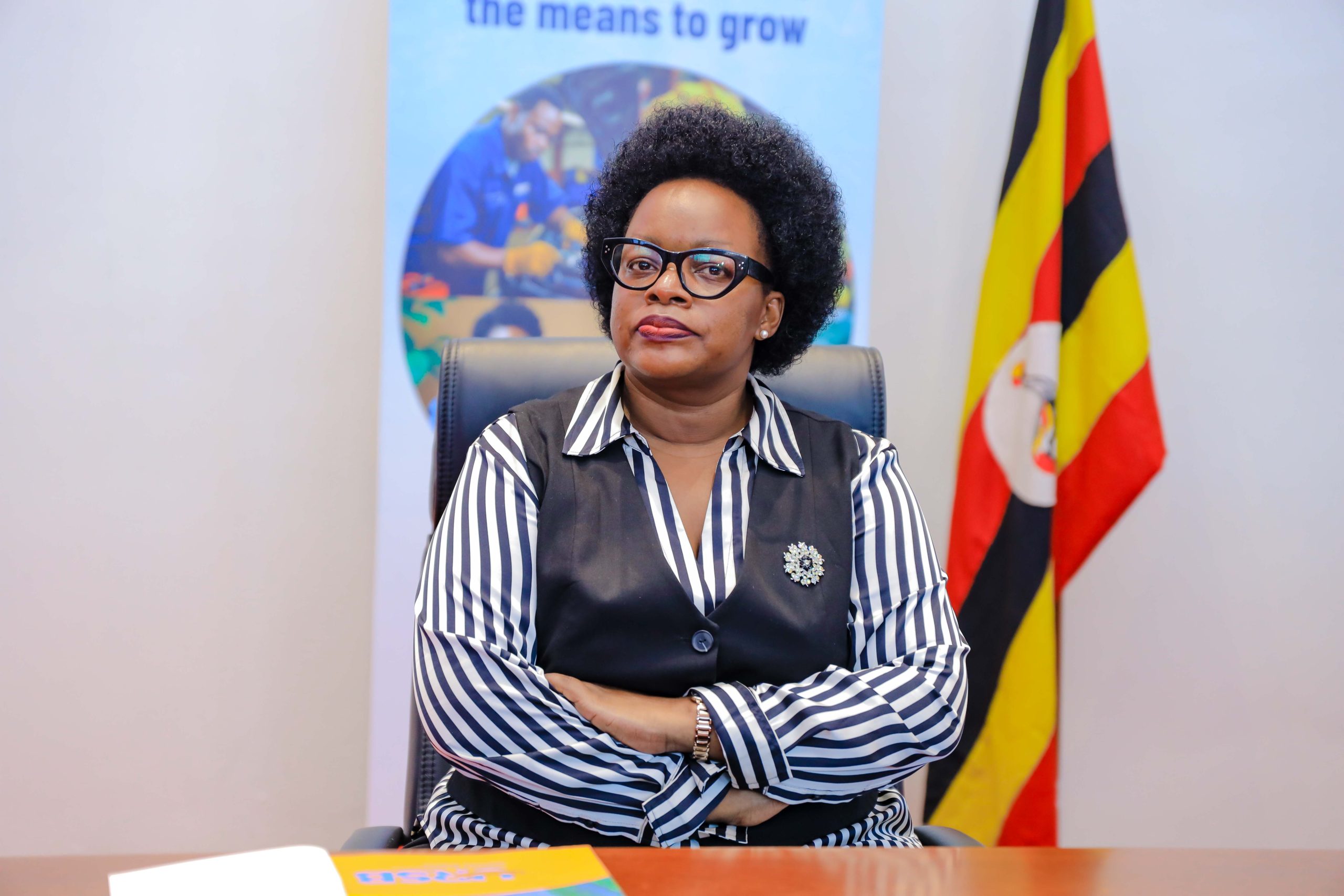
Ms. Mercy K. Kainobwisho is the Registrar General, Official Receiver, Chief Executive, and Accounting Officer of the Uganda Registration Services Bureau (URSB), where she leads national, regional and international efforts in business formalization, intellectual property protection, insolvency and receivership regulation, access to credit using the security interests in movable property, and institutional transformation.
An Advocate of the Courts of Judicature, she holds an LL.M. in Intellectual Property from the University of Turin, an MBA from Makerere University Business School, a Bachelor of Laws from Makerere University, and executive leadership training from Harvard and Yale Universities. She brings 18 years of experience in law, public sector governance, and institutional leadership.
Ms. Kainobwisho has chaired and co-chaired several regional and international committees under ARIPO and WIPO, and is a published author in leadership, legal innovation, and parenting, among others. Ms. Kainobwisho has won several awards. She was recently named among Africa’s Top 40 Influential Women by the African Diversity and Inclusion Center and awarded Outstanding Public Officer of the Year 2024 by KACITA.
She is widely respected as a visionary and family-oriented leader, reformer, and passionate mentor of young leaders across Uganda and beyond.
5th Floor, Uganda Business Facilitation Centre,
Plot 1 Baskerville Avenue, Kololo,
P. O. Box 6848, Kampala.
Caroline is a result oriented and competent Advocate of the High Court of Uganda and all Courts subordinate with 9 years’ experience spanning across corporate secretarial, commercial law and corporate and finance management. She also has experience in administration and human resource management having carried out roles that required such skills.
Caroline holds an Honors degree in Law from Makerere University and a Post Graduate Diploma in Legal Practice. She is also a member of the Institute of Chartered Secretaries and Administrators (ICSA) UK, Uganda Law Society (ULS), East African Law Society (EALS).
Previously, Caroline worked with Diamond Trust Bank for 4 years as Company Secretary, Head Legal and Head of the Debt Recovery Unit having worked as Company Secretary of National Bank of Commerce prior to joining Diamond Trust Bank. Caroline also served as Associate Partner and Administrator with Muwema and Mugerwa Advocates for 4 years..
Jackie is an accomplished and Experienced Administrator, an Urban Management Specialist knowledgeable, skilled in Project Management and a Dynamic Manager with over 22 Years of Management Experience.
Holds a Master of Business Administration (MBA) in Project Management and a number of certificates in various fields of Training.
Jackie is currently a Principal Urban Specialist in the Ministry of Local Government, Department of Urban Administration charged with Guiding, Supporting Technically, Monitoring all Urban Local Governments in addition to assessing the Management of Revenue Performance of Taxes, Local Revenues (Registrations and Collections). She has demonstrated expertise in leading teams to deliver strategic results and organizational success by spearheading the creation of Cities in Uganda.
She is renowned for her exceptional Leadership skills, a Champion of the New Urban Agenda promoting Resilience, Inclusivity, Safety and Sustainable Development in the Social Economic Transformation of the Country.
Her involvement in bodies like the National Physical Planning Board (A body responsible for Physical Planning in the Country) is testimony of her experience in Board operations and her proven robust leadership skills make her a valuable asset in Mobilizing strategically the Population for various achievements.
She has received several recognitions for her outstanding Performance and has won awards of being the employee of the year for two consecutive years at the Ministry of Local Government.
Mr. Masagazi is a seasoned public service administrator with over two decades of progressive service across Uganda’s central government institutions, including the Office of the President, the Office of the Prime Minister, and the Ministry of Trade, Industry, and Cooperatives. He brings a demonstrated record of executive-level administrative leadership, strategic coordination, and institutional management, with formal academic training in public administration and the social sciences.
Mr. Masagazi believes in a results-oriented approach to governance, with competencies in strategic planning, budget and financial management, human resource evaluation, and inter-ministerial coordination. He holds a Master of Public Administration and Management from Uganda Management Institute, a Postgraduate Diploma in Public Administration from Uganda Management Institute and a Bachelor of Arts in Social Sciences (Sociology) from Makerere University.
5th Floor, Uganda Business Facilitation Centre,
Plot 1 Baskerville Avenue, Kololo,
P. O. Box 6848, Kampala.
Ms. Mercy K. Kainobwisho is the Registrar General and Official Receiver of the Uganda Registration Services Bureau since December 2020. She is an Advocate of Courts of Judicature with vast experience in Intellectual Property Law, Business Law, Project Management, Oil and Gas Law, Leadership and General Management. She holds a Masters of Laws in Intellectual Property from University of Turin, Italy; a Master of Business Administration (MBA) from Makerere University Business School, Post Graduate Diploma in Legal Practice from the Law Development Center, and a Bachelor of Laws degree from Makerere University.
She is the sitting Vice-Chair of the World Intellectual Property Organization’s (WIPO) General Assembly and the WIPO Seventeenth Advisory Committee on Enforcement (ACE) sessions. She is also very passionate about mentoring young people into leadership among other things.
Ms. Tereza Namwach is a qualified professional currently serving as Assistant Commissioner for Finance and Planning, in the Ministry of Finance Planning and Economic Development (MoFPED). She has a robust educational background, including a Master of Arts Degree in Economic Policy and Planning and a Bachelor of Arts in Development Economics from Makerere University. With an impressive 14-year career trajectory within MoFPED, she has risen through the ranks from Economist/Finance Officer to her current position of Assistant Commissioner, Finance and Planning.
Ms. Tereza’s expertise lies in public sector planning, budgeting, and financial management, coupled with proficiency in policy formulation, and appraisal of economic functions. Her skills extend to IT proficiency in Government financial management systems and other computer applications. Her significant contribution to national budget reforms and experience as a Budget Analyst for key government sectors/programmes underscore her strategic mindset and ability to align financial processes with organizational objectives.
Beyond MoFPED, her involvement in bodies such as the Busitema University Council showcases her experience in Board operations, further enhancing her capabilities. With a deep mastery of the principles of public financial management, Tereza is well-equipped to play a crucial oversight role in fostering proper corporate governance across various sectors.
Ms. Tereza Namwach’s qualifications, extensive experience, and proven leadership make her a valuable asset for contributing to maintaining high standards of corporate governance as well as achievement of its strategic objectives.
George Fred Kagimu, renowned for his significant contributions to Ugandan society, has left an indelible mark as a seasoned politician, accomplished businessman, and dedicated civic leader. His illustrious tenure as the Mayor of Mukono Municipality from 2016 to 2021 showcased his commitment to progress and community development.
George Fred Kagimu continues to be a prominent figure in the Mukono region, both as a thriving businessman and as a valuable member of the Uganda Registration Services Bureau (URSB) board since 2023.
Serving as Chairman of the Total Uganda Alumni Group since 2018, he actively fosters professional networks and collaboration.
In his role as Vice Chairman of the Uganda National Chamber of Commerce and Industries, he champions the interests of Ugandan businesses. Additionally, his ownership of Festino City in Mukono underscores his commitment to community enrichment. George Fred Kagimu’s multi-faceted leadership is an asset to Mukono and the nation.
Annie is an accomplished business professional, experienced Human Resource and administration practitioner and a Managing Partner of Info Consults International Ltd, a Consultancy firm established in 2004 to provide solutions in Records Management, Document Management, Knowledge Management, Project Management and Information Technology.
Holds a Master of Business Administration (MBA) in Human Resource Management and certifications in Corporate Governance and Balanced Scorecard Strategic Management System among others.
Annie has over 20 years of Management experience across various domains, having previously worked at AMPROC INC and Uganda Telecom, where she demonstrated expertise in leading teams to deliver strategic results and organizational success.
Her current pursuit is the digitalization of business processes to enhance service delivery in both public and private sectors. Noteworthy, she has provided strategic leadership for the conceptualization, design, development and successful deployment of a state-of-the-art Electronic Document and Records Management System (eDocs+), an innovation that will revolutionalise the management of records and documents across the Government of Uganda.
She is an avid reader of leadership, business and management literature; a health & fitness enthusiast and a Rotarian, committed to uplifting the quality of life of the vulnerable and less privileged in society.
Mr. Byaruhanga Alex is an experienced litigation lawyer, Researcher and Legislative Counsel with excellent knowledge of legal reform, policy reform and formulation with advanced skills in statutory interpretation and legislative process both Principal legislation and Subsidiary legislation. He is an Advocate of the High Court, Principal State Attorney, Office of the First Parliamentary Counsel, Ministry of Justice and Constitutional Affairs / Attorney General’s Chambers. He is a member of East African Law Society and Uganda Law Society since 2014.
Ms. Hope Okeny is a devoted public health advocate, visionary social entrepreneur, and astute business analyst boasting a rich tapestry of over two decades in orchestrating transformative endeavors across both private enterprises and social endeavors. Profoundly skilled in the intricate art of business development, adeptly steering projects from conception to fruition, and delivering unparalleled health services with precision and finesse.
Armed with extensive experience in navigating the complexities of post-war communities, championing the cause of social justice through the prism of economic empowerment. Renowned for exceptional leadership prowess, adeptly crafting impactful organizations and nurturing environments steeped in collaboration and excellence.
Ms. Okeny hold a Masters in Public Health, International Health Sciences University, Kampala, Masters in Business Administration, Uganda Martyrs University, Nkozi, and Bachelor of Arts, Business Studies, University of East London.
Chairman Board of Directors, URSB
Butagira & Company Advocates
Plot 80 High Street
P. O. Box 437 Mbarara.
Landline: 0382 0280613
Amb. Francis K. Butagira is a Managing Partner of Butagira and Company Advocates and as well as an Advocate of the Supreme Court and Courts subordinate.
Previously, Amb.Butagira served in various capacities in the international political community and in Uganda. He has served as Member of Parliament and Speaker of the Ugandan Parliament. He has also served as Ambassador to Ethiopia, Kenya, Germany, Austria and the Vatican, Ambassador Extraordinary and Permanent Representative of Uganda to the United Nations.
While serving at the United Nations, he was elected to the Vice Presidency of the General Assembly which is charged with the responsibility of managing the sessions of the body and also as Chairman of the Third Committee, a subsidiary organ of the General Assembly, responsible for social, cultural, humanitarian and human rights affairs. His professionalism during his career is impeccable and he displayed utmost diplomacy when he negotiated the election of Uganda to the Security Council.
Through his educational exploits, he studied law at the University of Dar es Salaam and is a Harvard graduate where he graduated with a Masters of Law degree.